Stakeholder/Partners: Displaced Homeowners (study participants)
Location: 2018-2020 (California), 2021-2024 (Kansas)
Timeline: 2018-2024
Area of Focus: Disaster Displacement, Building Codes, Housing Resilience, Rebuilding
Department/Courses Involved: Interior Architecture
Executive Summary: Assistant Professor of Interior Architecture Mariana Junqueira presented a paper titled “Building Codes and Housing Resilience in California: Displaced Homeowners’ Perceptions on Sustainable Rebuilding” at the Environmental Design Research Association (EDRA) 2024 Annual Conference in Portland, Oregon. Drawing on research conducted between 2018 and 2020 in California, the study is based on qualitative interviews with individuals displaced by the 2018 wildfires. Among other challenges, findings revealed that building codes further contributed to emotional, social, and financial burdens during the rebuilding process.
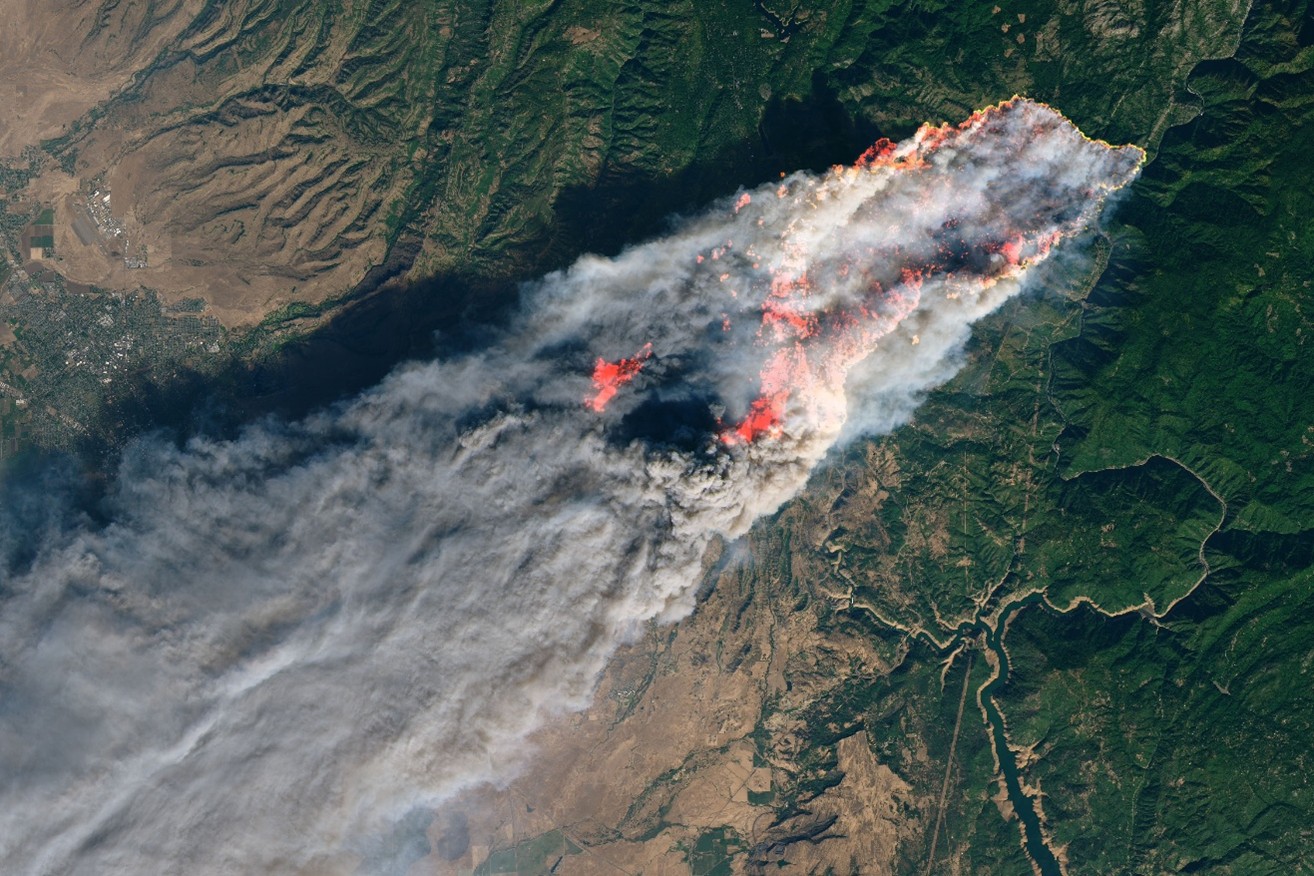
Project Description: This paper presents a historical analysis examining how building codes in California have evolved over time to enhance wildfire resilience, while also identifying unintended negative impacts on homeowners’ rebuilding experiences. Historically, federal public land management policies treated wildfires as events to be prevented or suppressed. It was not until the early 1970s that policy began to recognize wildland fire as a natural ecological process (Pyne, 1982) that could not be fully eliminated. This ecological understanding gained broader recognition by the mid-1980s and became a national concern. Due to its high wildfire risk, California has continually implemented policies requiring or incentivizing home hardening to improve housing resilience. This paper explores the importance of resilience housing in California, where significant housing development happens in Wildland-Urban Interface areas (WUI). Extreme fire behavior conditions are becoming more common, and it is reasonable to assume the inevitability of wildfire occurrence with extreme wildfire conditions, resulting in more frequent and more intense fire disasters. Given the inevitability of extreme wildfire conditions, the inevitability of WUI fire disasters seems assured if the emphasis continues to be on a reactive management of wildland and structure firefighting approach.
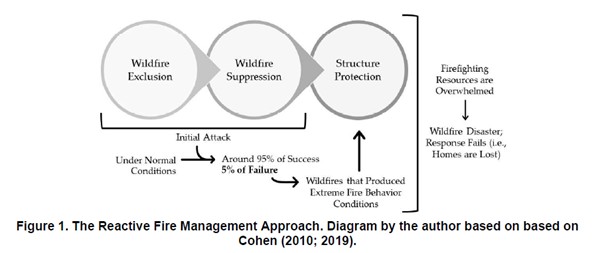
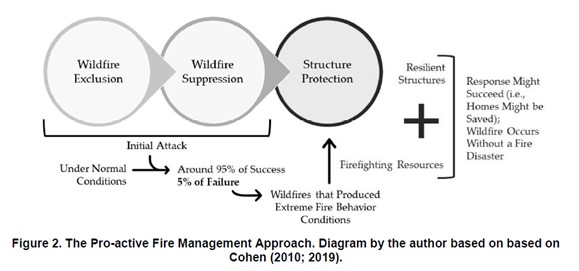
Fortunately, scholarship has advanced enough to say that WUI fires can occur without a WUI fire disaster, even in extreme wildfire conditions. This happens because although this type of community destruction is initiated by wildfires, structure ignitions are not determined by geographic location; rather, the fire destruction is determined by the ignition conditions of a structure in relation to its immediate surroundings. If homes are made ignition-resistant and most homes do not ignite, fire protection resources are not overwhelmed, the available structure protection is effective for ignitions that do occur, and WUI fire disasters are prevented (Cohen, 2019). Hence, extreme wildfires can occur without WUI fire disaster if the emphasis shifts to a pro-active management of wildland and structure fire-fighting approach. This process can have a different outcome because of changes (i.e., Resilient Structures) that affect the structure protection phase of the fire management process.
However, homeowners do not always perceive risk accurately, and when navigating disaster displacement, expectations to rebuild more resilient homes can add to already traumatic experiences. While building codes establish minimum standards for safe design and construction, their implications for displaced homeowners are not always well understood. Examining how code changes affect the rebuilding process from the homeowner’s perspective is therefore essential to informing more human-centered approaches to sustainable rebuilding. Guided by the question, “How have changing building codes impacted displaced homeowners’ rebuilding experiences?”, this study combines historical analysis with qualitative interviews conducted with individuals displaced in 2018. Findings confirm that building codes further contributed to emotional, social, and financial burdens during the rebuilding process. The analysis also identifies two critical gaps that were tied to these experiences—education and context-based innovation—that limit the effectiveness and accessibility of resilience-driven policies. In response, the study includes a systematic review of successful strategies implemented globally. The paper concludes with recommendations for more human-centered approaches to sustainable rebuilding, emphasizing the need to align regulatory frameworks with homeowners lived experiences. By integrating resilience goals with social-ecological considerations, these strategies aim to support more equitable and effective post-disaster recovery.
References:
Pyne, S. (1982). Fire in America: A cultural history of wildland and rural fire. Princeton University Press.
Cohen, J. D. (2019). An analysis of wildland-urban fire with implications for preventing structure ignition. White Paper.
Citation: Junqueira, M. (2024, June 19-22). Building Codes and Housing Resilience in California: Displaced Homeowners’ Perceptions on Sustainable Rebuilding [Individual Paper]. Environmental Design Research Association – EDRA Annual Conference, Portland, Oregon.

