Location: Atlanta, GA
Year/Timeline: 2025
Area of Focus: Emerging and Established Professionals, Tiny Home Design
Department/Courses Involved: Interior Architecture – APDesign – KSU, Led by Professor Vibhavari Jani
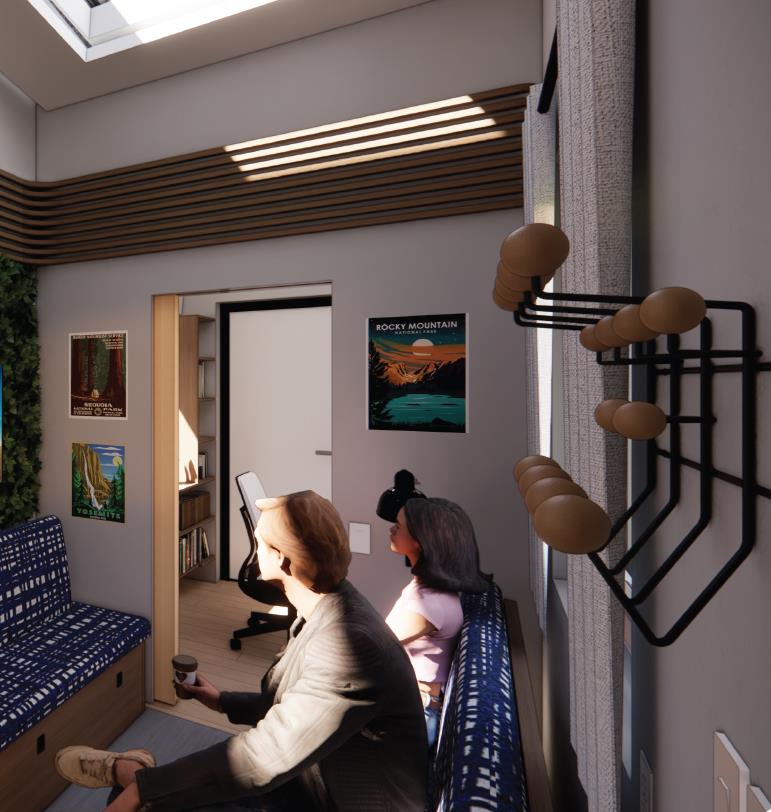
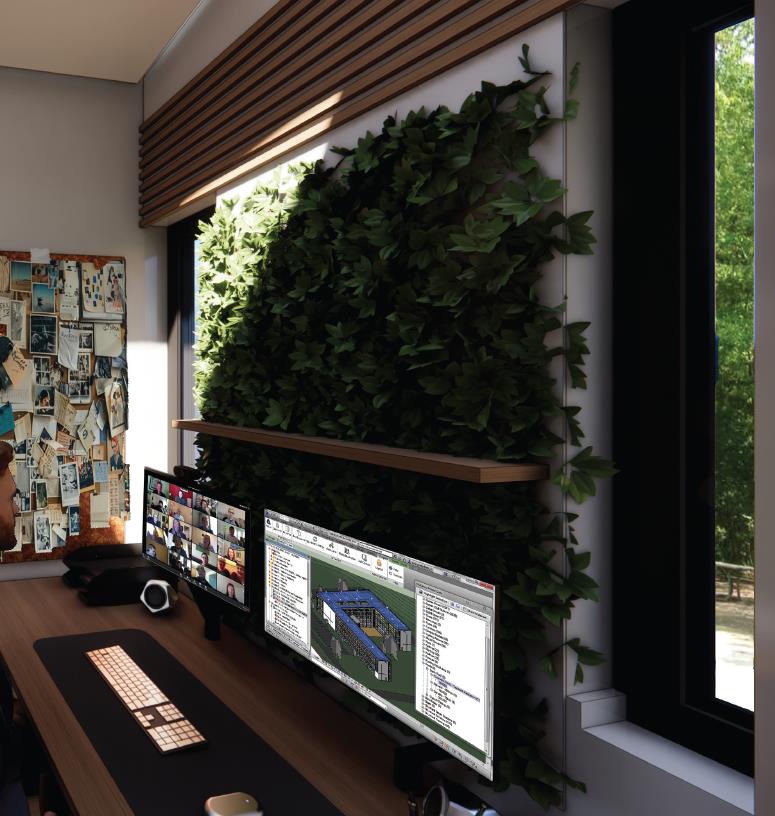
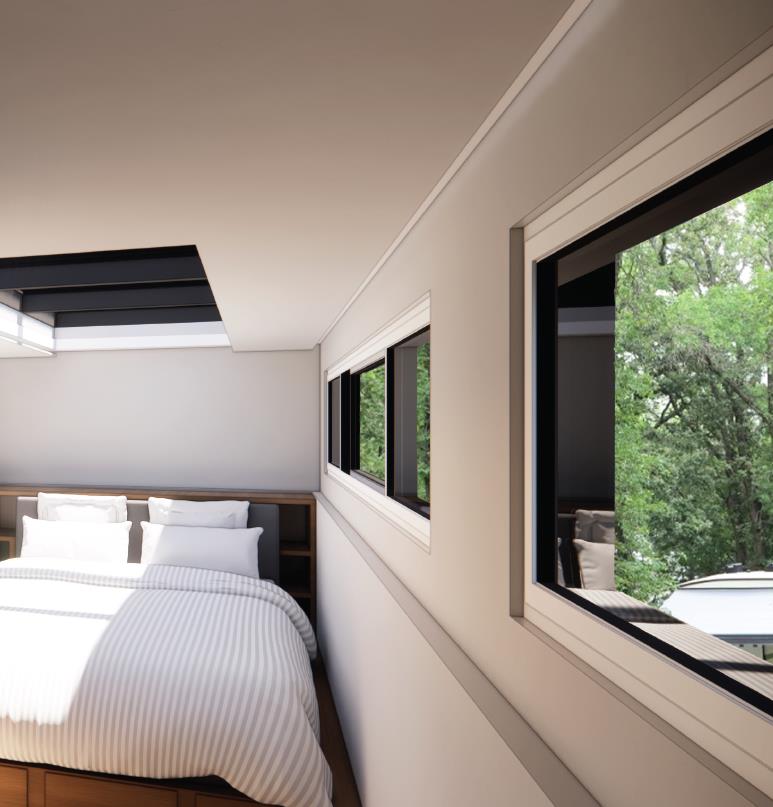
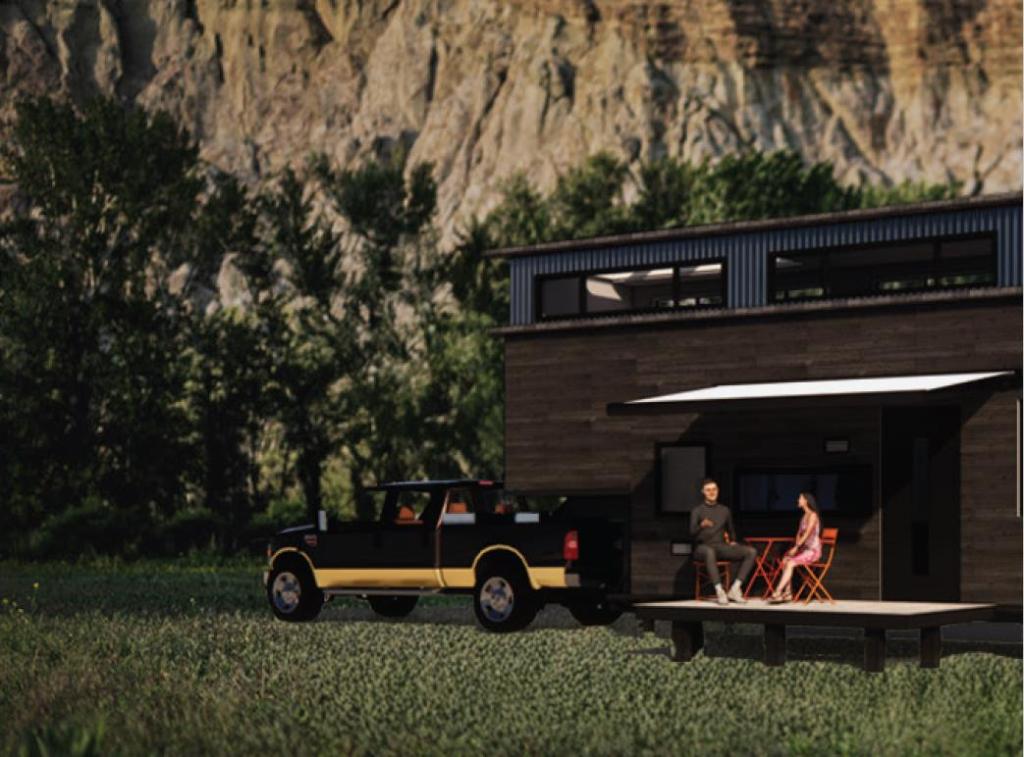
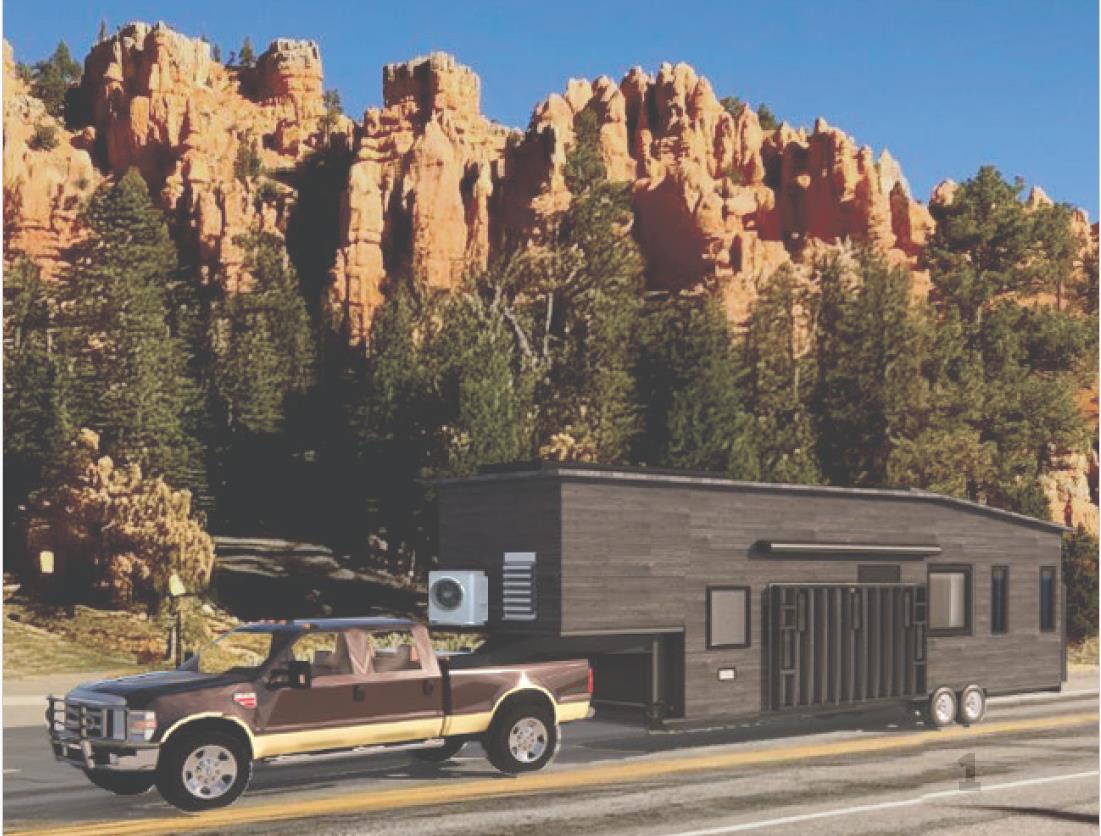
Executive Summary: Mr. Andrew Myers, an Interior Architecture graduate student, under the guidance of Professor Vibhavari Jani (Design) and Associate Professor Kutay Guler (Programming) designed a tiny mobile housing model for his graduate thesis, as an innovative response to evolving living and working needs of emerging or established professionals who want the freedom to work and live at their desired location. Designed as adaptable micro-housing model, Mr. Andrew’s proposal prioritizes user well-being, flexibility, and long-term resilience. In his proposed mobile tiny home, he emphasizes spatial strategies to enhance living experiences through integration of natural light, biophilic elements, and sensory control to enhance mental health, reduce stress, and support productivity. Modular furniture, multifunctional spaces, and seamless technology integration enable customization and mobility, empowering users to shape their environments based on their personal preferences. By transforming underutilized space into efficient, human-centered living, his design advances an equitable and affordable housing solution that supports remote work, promotes sustainability, and redefines compact living through adaptability, comfort, and innovation.
Project Description: As housing affordability declines and work patterns shift toward hybrid and remote models, there is an urgent need for adaptable, affordable, and human-centered housing solutions that support both well-being and productivity. In the United States, the median rent has increased by over 30% in the last decade, with many metropolitan areas requiring households to spend more than 30–50% of income on housing. Tiny and alternative housing models, typically ranging from $40,000 to $120,000, have emerged as scalable responses to this affordability gap, particularly for individuals seeking flexibility and financial resilience. This tiny home solutions can support remote work, which has fundamentally reshaped our domestic life. Nearly 35% of U.S. workers now engage in hybrid or fully remote work today.
This project, designed by Andrew Myers, an Interior Architecture graduate student, guided by Professor Vibhavari Jani (Design) and Associate Professor Kutay Guler, proposes a tiny mobile housing model that reframes compact living as resilient, adaptive and affordable housing solution. Grounded in environmental psychology and biophilic design, the proposal integrates natural light, sensory-responsive environments, acoustic control, and material warmth to enhance cognitive performance, reduce stress, and improve overall well-being.
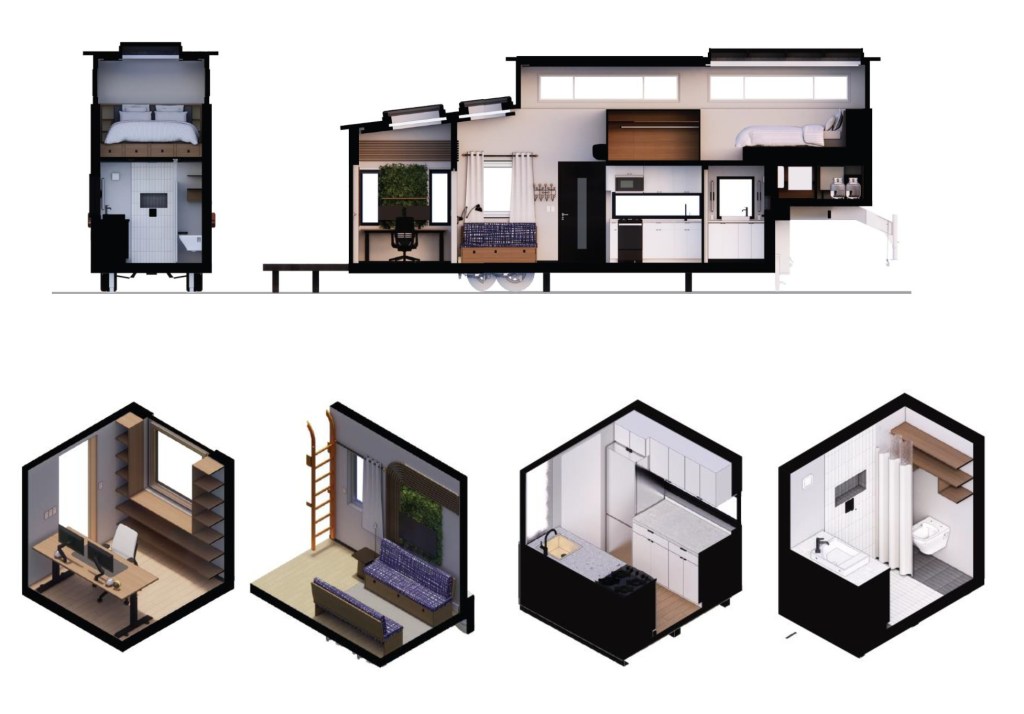
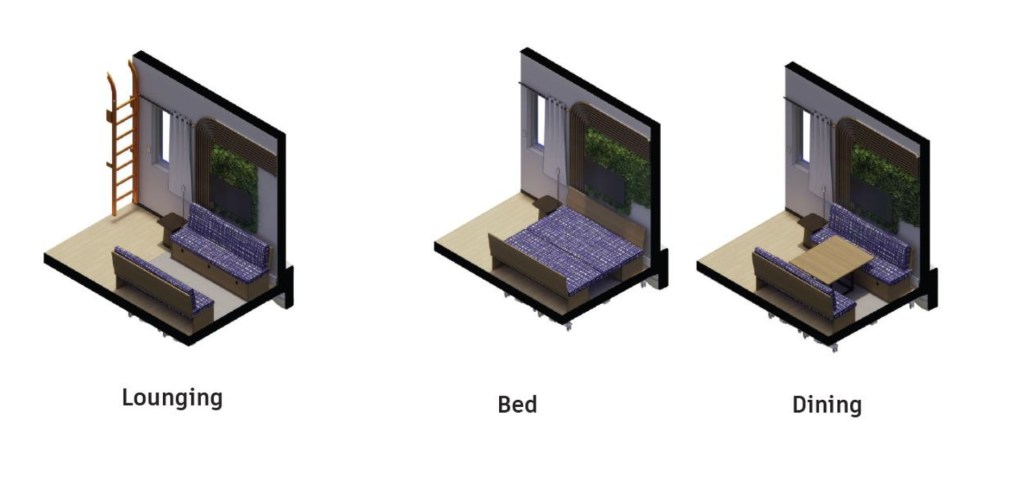
Spatially, modular and multifunctional design strategies maximize limited square footage while enabling personalization and long-term adaptability. Seamless technology integration supports evolving work styles, while flexible layouts transform underutilized zones into productive or restorative spaces. This tiny house model provides an innovative solution to address the intersection of housing insecurity, mental health, and shifting working environments and labor structures. It positions tiny mobile housing not as a constraint, but as an equitable, future-ready and affordable housing solution that provides freedom to select the place to live and work, and fosters autonomy, connection, and resilience in an increasingly competitive job market.