Location: Norwich, KS
Year/Timeline: 2025
Area of Focus: Supportive Housing as a treatment option for Mental Health
Department/Courses Involved: Interior Architecture – APDesign – KSU, led by Professor Vibhavari Jani, (Design), Associate Professor Kutay Guler, (Programming)
Executive Summary: In her graduate thesis, Interior Architecture student Kenna Hibbs, guided by Professor Vibhavari Jani (Design) and Associate Professor Kutay Guler (Programming), reframes mental health care through by introducing supportive housing, thereby positioning the built environment as a critical tool for long-term healing and well-being. In the United States, 1 in 5 adults experiences mental illness annually, yet most care models focus on short-term stabilization rather than sustained recovery. This proposal introduces a trauma-informed housing model that bridges the gap between clinical care and daily life. Designed as supportive residential infrastructure, it integrates autonomy, privacy, and community with biophilic and sensory-responsive environments. By fostering dignity, connection, and empowerment, the project provides a new prototype, advancing an innovative, scalable approach to mental health—transforming housing into a platform for resilience, recovery, and reintegration.
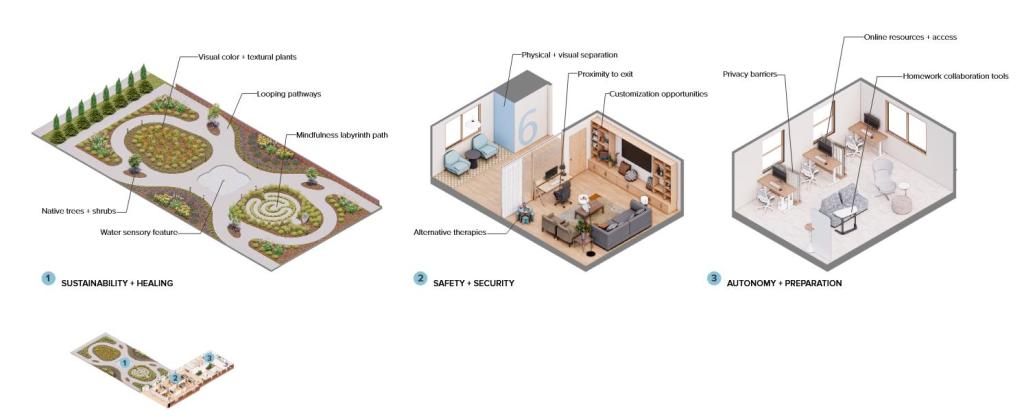
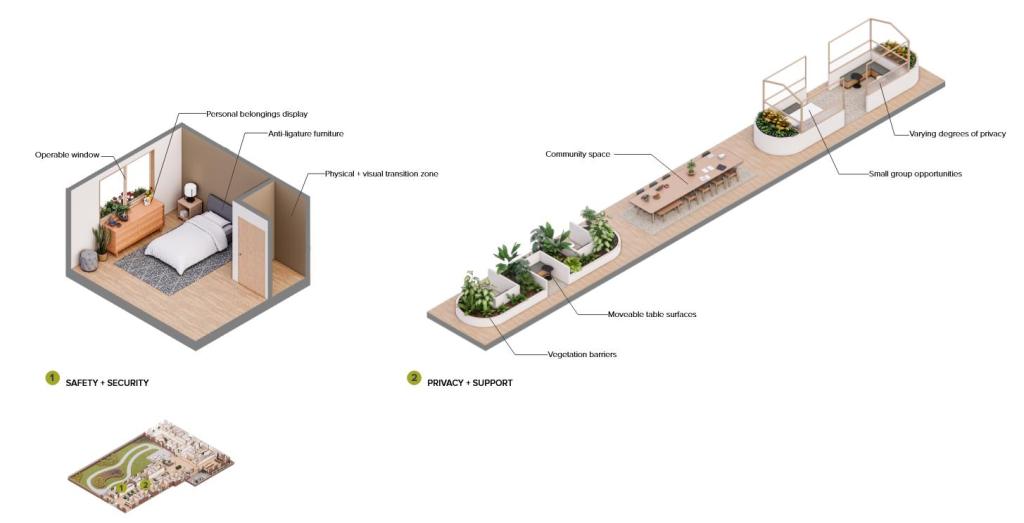
Project Description: In the United States, one in five adults experiences mental illness annually, yet existing care models remain fragmented, reactive, and inequitable—prioritizing short-term stabilization over sustained recovery. Individuals navigating trauma, depression, anxiety, and related conditions often cycle between acute psychiatric facilities and unsupported living environments, revealing a critical systems gap between clinical care and everyday life. This disconnect disproportionately impacts vulnerable populations, especially in rural areas of the United State, reinforcing cycles of instability, isolation, and unmet long-term needs. In her graduate thesis, Interior Architecture student Kenna Hibbs, guided by Professor Vibhavari Jani (Design) and Associate Professor Kutay Guler (Programming), proposes and advances a systems-level intervention by reframing housing as critical mental health infrastructure—integrating psychiatric care, community, and daily living into a cohesive, equity-driven model that bridges clinical care and reintegration. Rather than treating housing as a passive backdrop, Ms. Hibbs’ design positions it as an active agent in healing—supporting autonomy, dignity, and belonging. Grounded in principles of trauma-informed design, the proposal integrates safety, choice, and empowerment through spatial strategies that prioritize privacy, flexibility, and control, alongside opportunities for social connection.
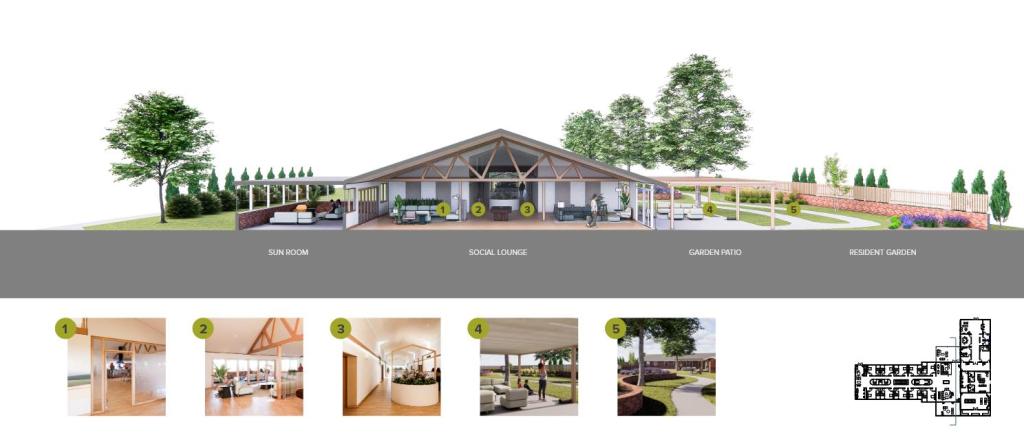
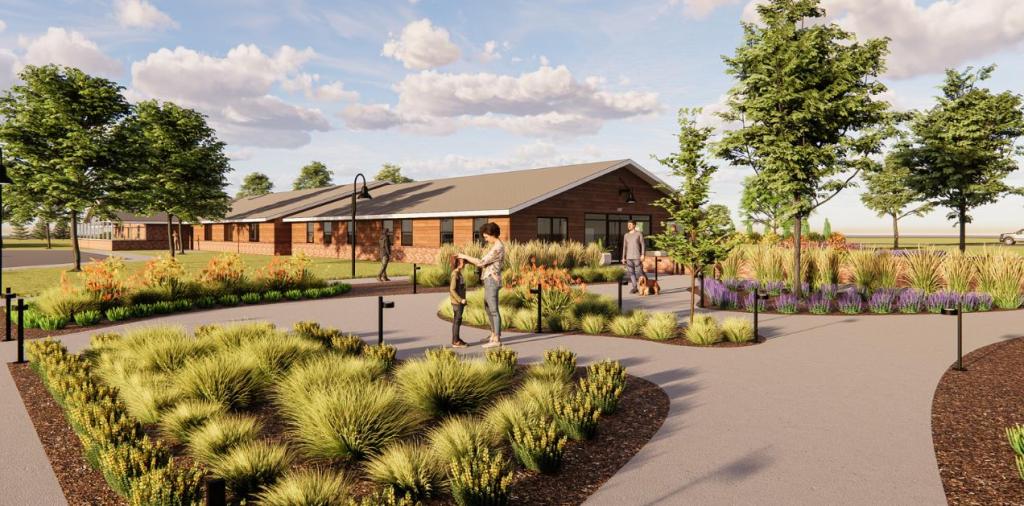
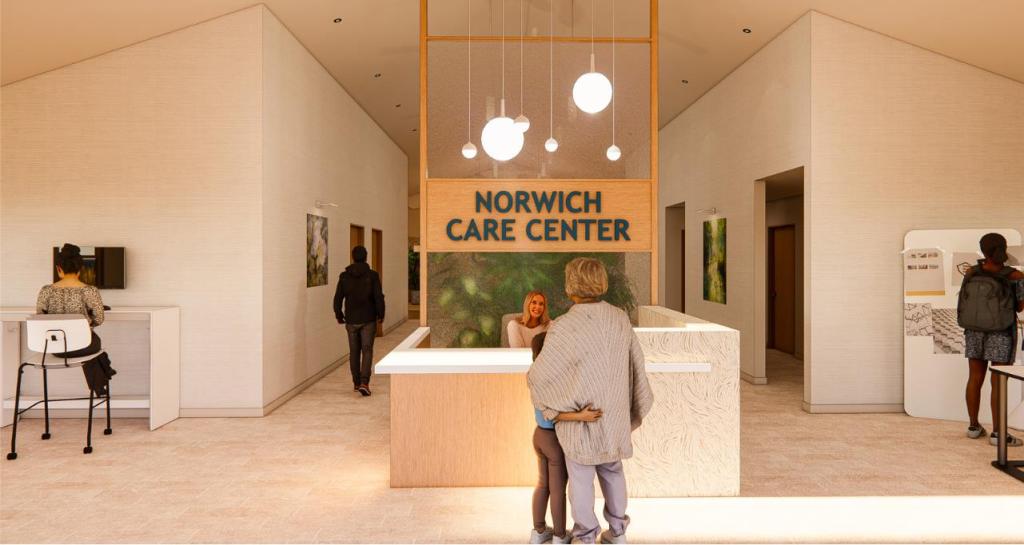
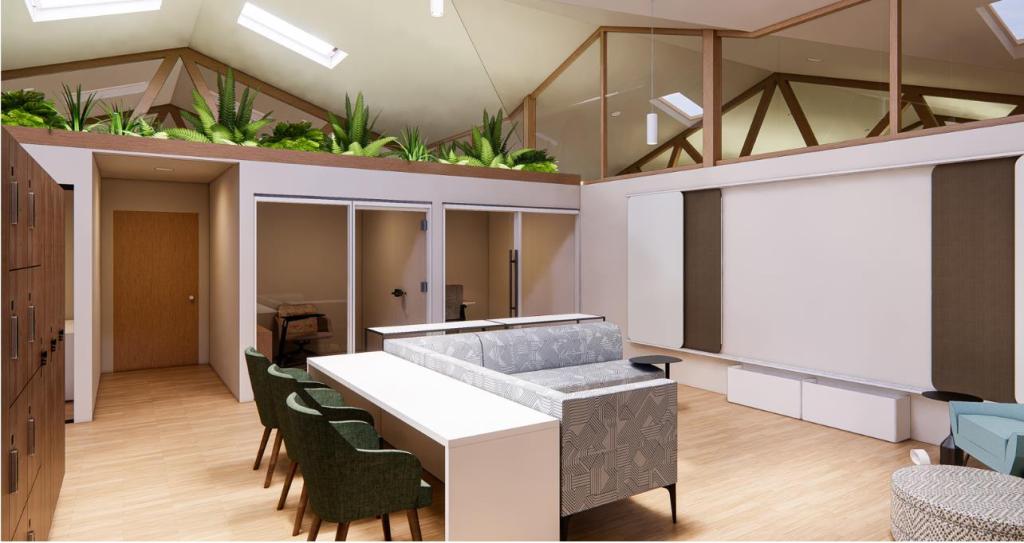
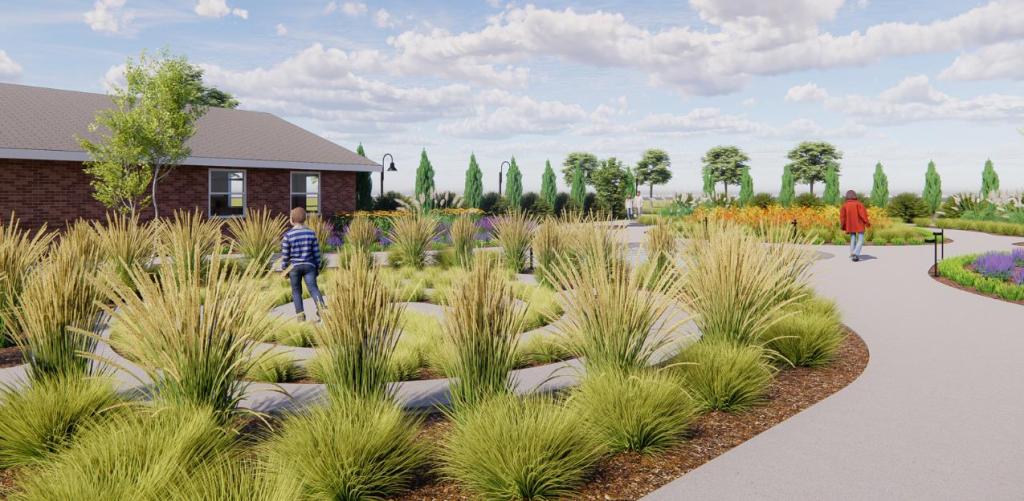
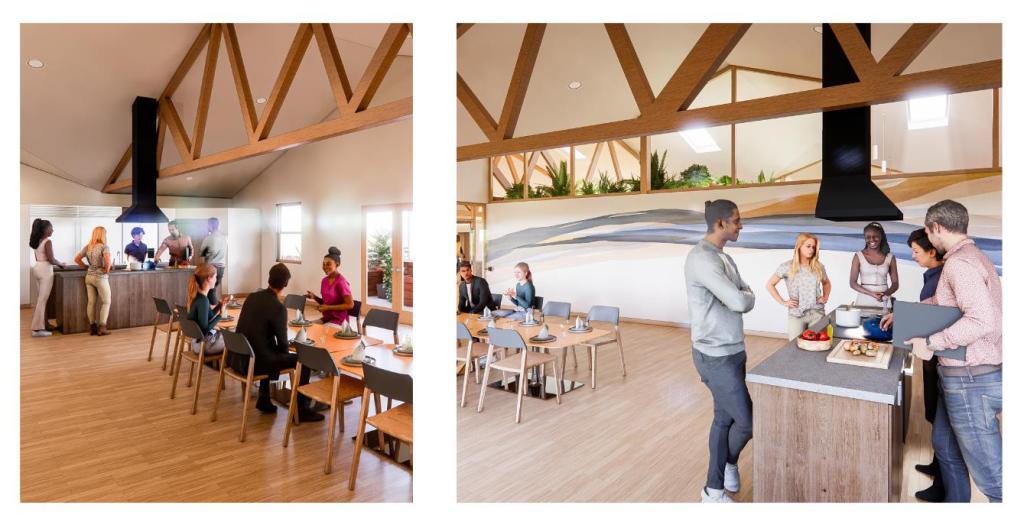
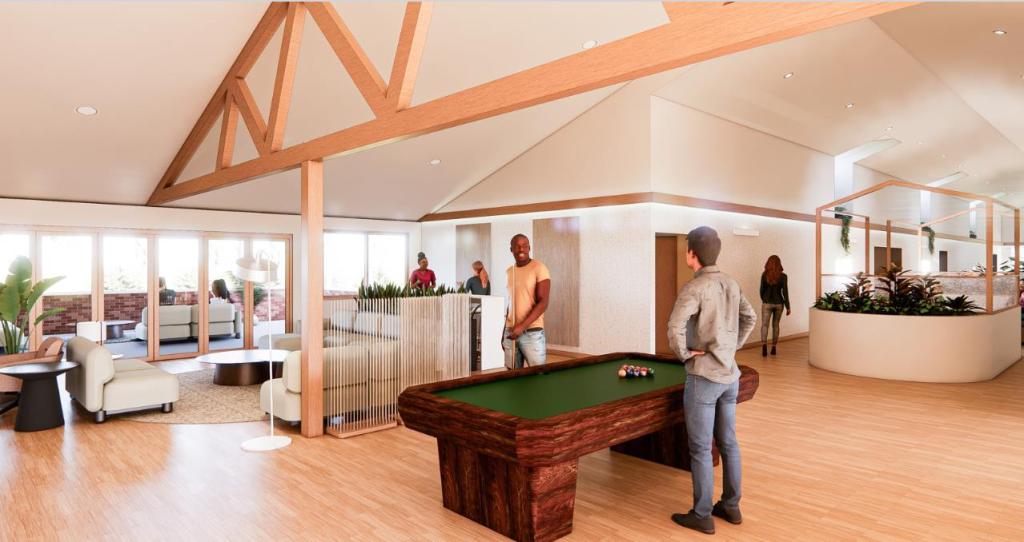
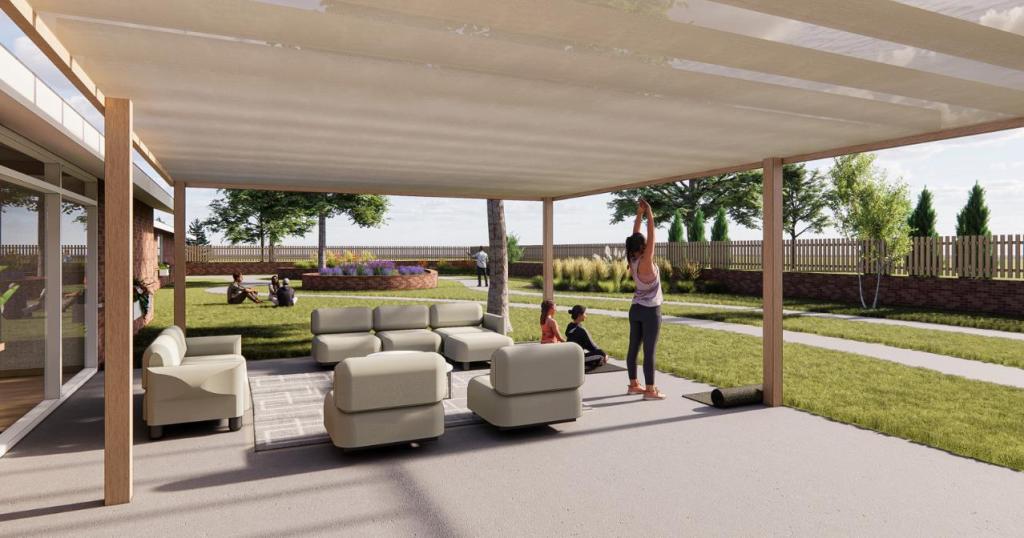
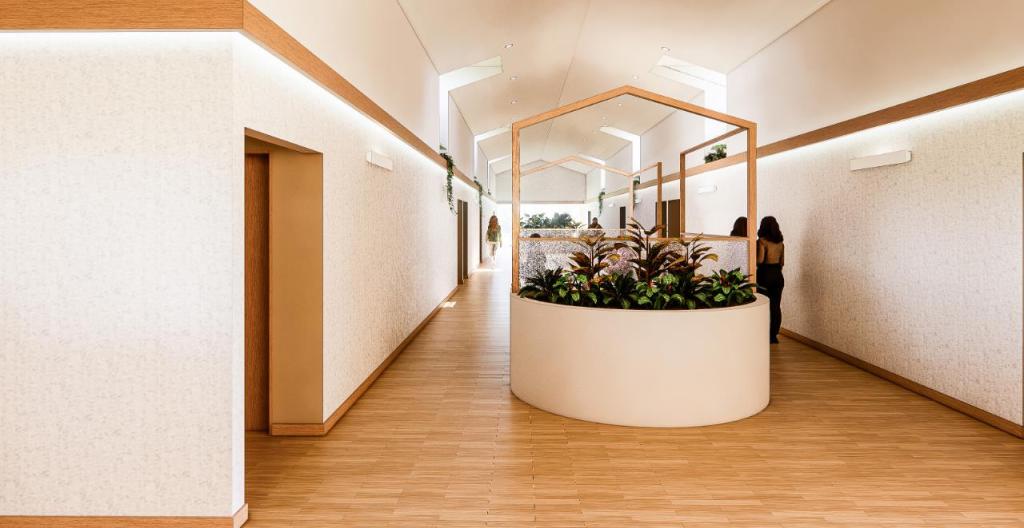
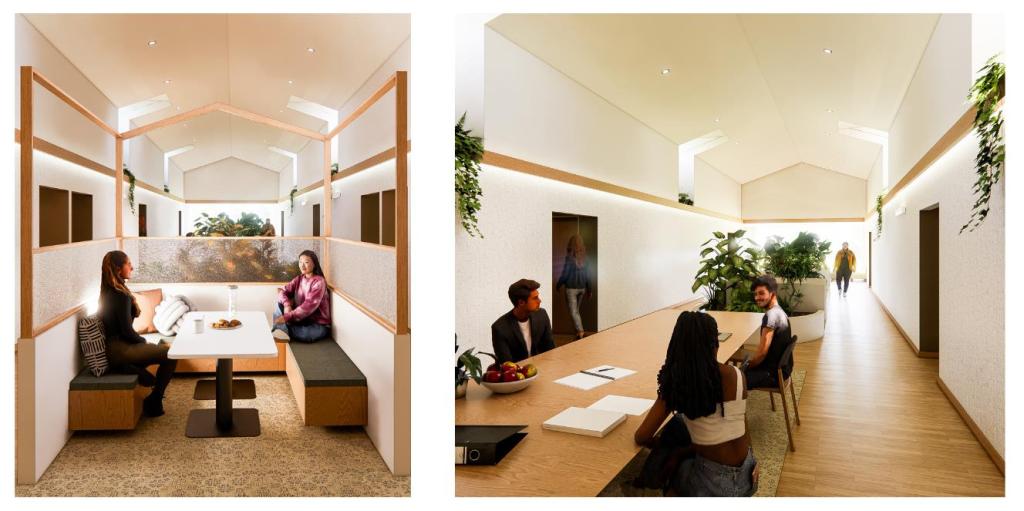
This project introduces a hybrid residential typology that combines wellness-centered care environments with supportive housing. Biophilic design, sensory modulation, and access to nature are embedded to reduce stress and improve mental health outcomes, while layered communal spaces foster peer support and collective resilience. Importantly, the design challenges institutional paradigms by creating non-stigmatizing, community-integrated environments that reflect the diversity and lived experiences of residents. A gradient of spaces—from private residential units to semi-private thresholds and shared community zones—supports autonomy while enabling choice-based social interaction. Decentralized “wellness nodes,” including counseling rooms, sensory retreat spaces, and peer-support hubs, are embedded within residential area to normalize care and reduce stigma. Circulation is reimagined as a therapeutic pathway, incorporating daylight, views to nature, and moments of pause to promote regulation and orientation.
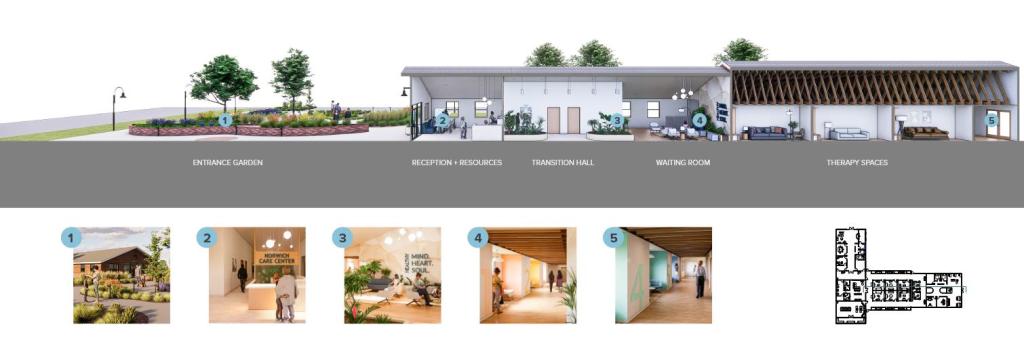
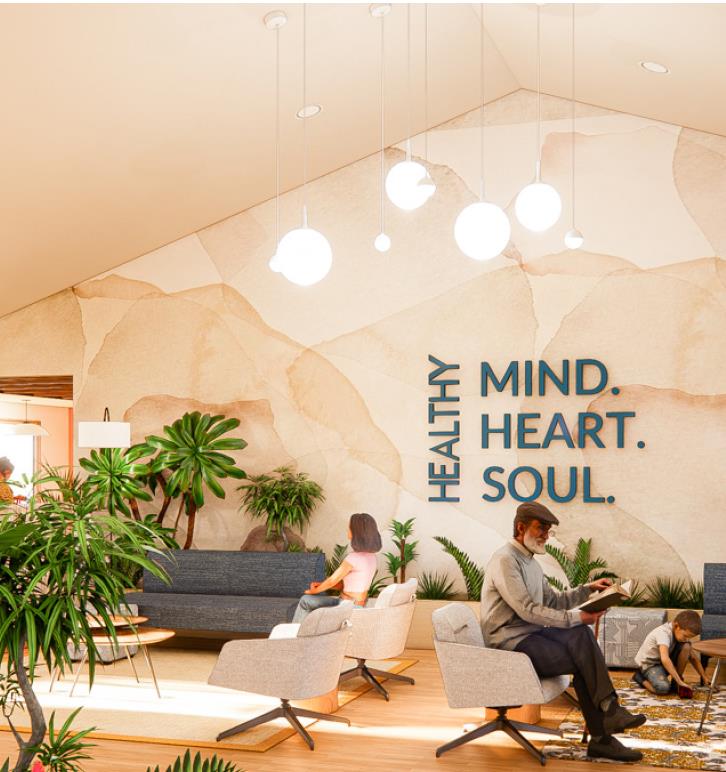
Biophilic strategies—healing gardens, natural materials, indoor plants —are paired with sensory-responsive design, offering environments that reduce stress and accommodate neurodiversity. Flexible, modular units adapt to changing needs, supporting continuity of care over time. Public-facing areas integrate community resources and programming, fostering social connection and strengthening neighborhood ties.
By emphasizing equity and systemic change, this project prioritizes accessibility beyond ADA minimums, cultural responsiveness, and inclusivity in both spatial experience and program delivery. It challenges institutional models by replacing isolation with connection, rigidity with adaptability, and stigma with dignity. By integrating housing and psychiatric care through evidence-based design, this project offers a scalable, replicable framework that addresses root inequities in mental health systems. It demonstrates how design can move beyond intervention to transformation—supporting long-term recovery, empowering individuals, and advancing a more just and resilient future for mental health and housing.
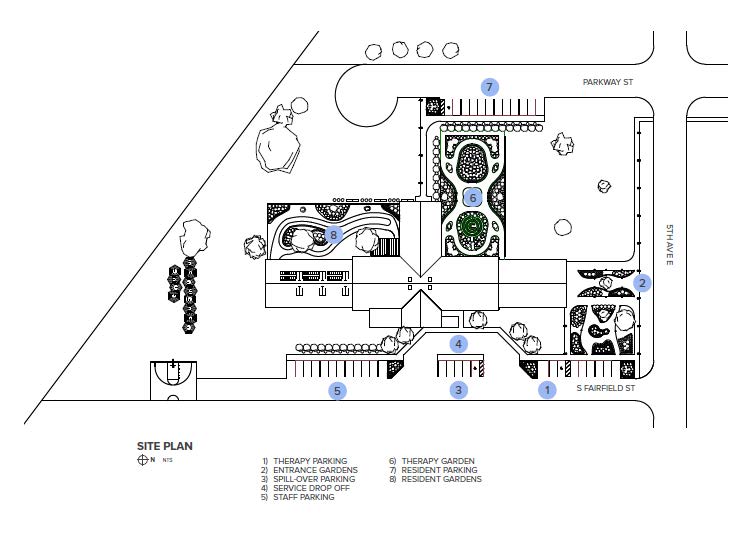
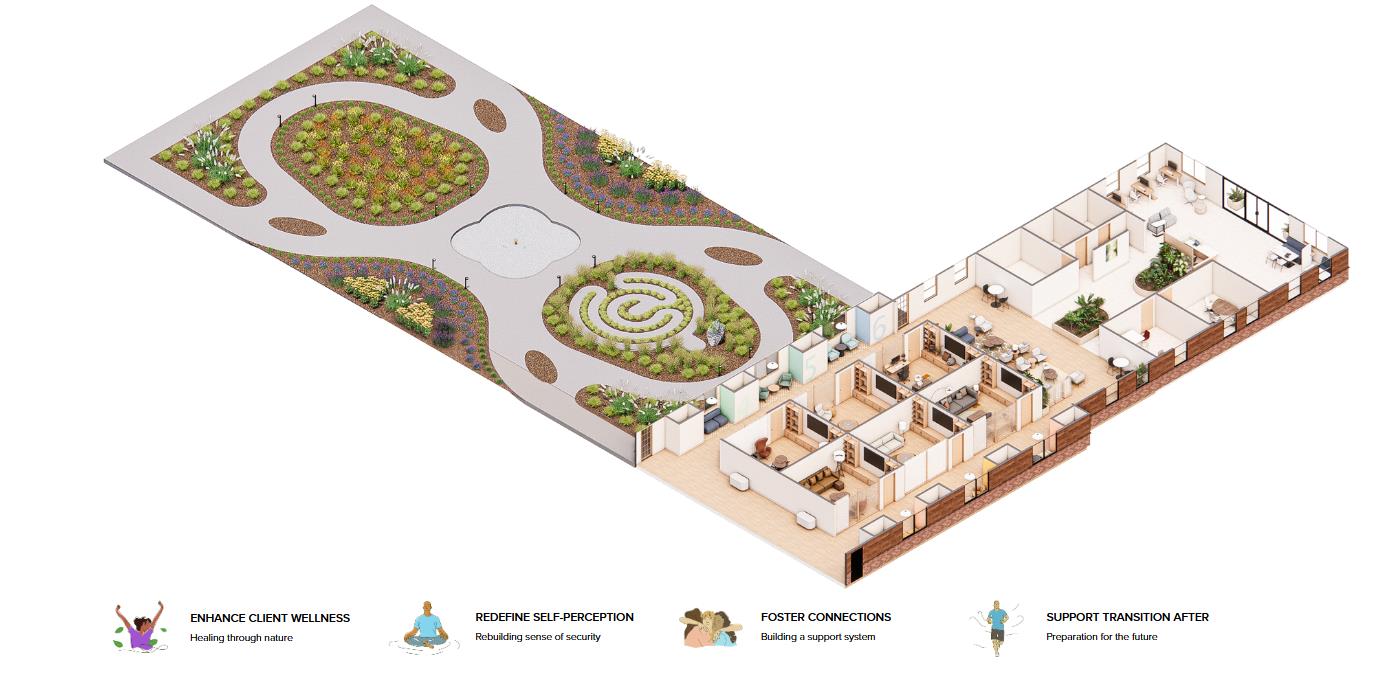
As a systems-level intervention, this model addresses structural gaps in mental health care by aligning housing, health, and social support into a cohesive framework. It offers a scalable, inclusive approach that prioritizes underserved populations and promotes continuity of care beyond clinical settings. By redefining housing as a platform for healing, this project advances a more equitable, humane, and resilient vision for mental health—one that supports not only recovery, but long-term well-being and social reintegration.